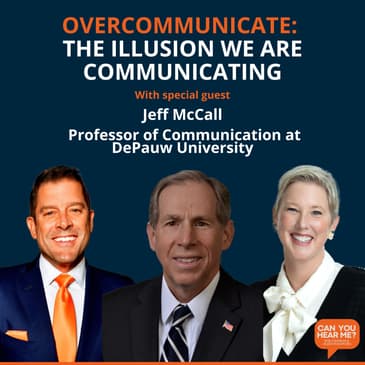
Jeffrey M. McCall is a Professor of Communication at DePauw University. He is a public commentator on media and journalistic ethics and standards. He is a contributing op-ed columnist for The Hill. His columns have also appeared in USA Today, Indianapolis Star, Atlanta Journal-Constitution, Chicago Tribune and dozens of other papers. He makes frequent appearances on radio, television and cable news outlets. He has been interviewed and quoted by over 125 newspapers nationwide, including the New York Times, USA Today, Los Angeles Times, Washington Post, Chicago Tribune and others.
McCall teaches courses in electronic journalism, communication ethics, media law, and media culture. He is the faculty supervisor of DePauw’s nationally recognized radio station, WGRE-FM. He has professional media experience as a radio news director and as a correspondent for National Public Radio.
McCall is the author of the book, Viewer Discretion Advised: Taking Control of Mass Media Influences, published by Rowman & Littlefield.
McCall earned a BA from DePauw University, an MA from the University of Illinois, and the PhD from the University of Missouri.
https://www.amazon.com/Overcommunicate-Business-Executives-Aspiring-Leaders/dp/B0GWQ9XJNP
Subscribe to our newsletter on LinkedIn: https://www.linkedin.com/build-relation/newsletter-follow?entityUrn=7373364855967461376
Check out our website: https://canyouhearmepod.beam.ly/
Thank you for listening to "Can You Hear Me?". If you enjoyed our show, please consider subscribing and leaving a review on your favorite podcast platform.
Stay connected with us:
- Follow us on LinkedIn!
- Follow our co-host Eileen Rochford on Linkedin!
- Follow our co-host Rob Johnson on Linkedin!
[00:00:19] Hello everyone and welcome to another edition of the Can You Hear Me podcast. I'm Rob Johnson, president of Rob Johnson Communication. And I'm Eileen Rochford, CEO of the marketing and strategy firm The Harbinger Group. Today we're going to discuss Rob's new book, Overcommunicate, a guide for business executives and aspiring leaders, which was released in April. Rob, give us an update. How's it going so far?
[00:00:44] Well, I have to say, to have spent 14 months going through the entire publishing process from just coming up with ideas to doing interviews to writing to doing a presale campaign to revisions and copy editing and proofreading and layout and cover art. And then to realize when it came out in April, I only just got to the start line. Now you got to sell it. You got to get people to read it. You have to get people to talk about it.
[00:01:11] And so it's been very exciting and I'm proud that I was able to do it. I said in my acknowledgements at the end of the book, I think it's something like 81% of people say, Oh, I got a book and me, I can write a book. And about one or 2% actually do it. So I'm proud of that, but it is a journey. So podcasts like this book signings, getting in front of different professional groups. That's kind of where I'm at right now. And it's a lot of fun to be able to talk about it and have people read it. And hopefully if they read it and they give a
[00:01:41] review on Amazon and say, man, that really made a lot of sense. So that really, I really connected with that, that thought. So it's, it's going. That's great. That's great. Well, today we're going to spend a bit of time talking about the fourth chapter of your book, the illusion we are communicating when we are not. And in it you wrote, and I'm going to quote here.
[00:02:00] Okay. You cannot execute your external strategy with stakeholders. If like customers, vendors, the media, and the public, you don't first painstakingly achieve alignment with your leadership and by extension, all of your employees. And then you go on to write, they are your greatest assets and cheerleaders lending a megaphone to your message that will amplify and solidify it in ways you can't do individually. That feels like it is the crux of the entire book in some regards.
[00:02:27] It really is. And, and people know this, that know us that you're the subject of chapter nine of the book, communicating in a remote working environment. So I've got two of my go-to favorite people on this podcast today, but it is the crux of it because when I define, when I first said over communicate, and I realized there's a negative connotation to that in some regards, I had to make sure everybody understood. I wasn't talking about micromanaging. Hey, I sent my coworker 75 email.
[00:02:56] It was making sure that everybody is aligned, making sure that those messages are clear, making sure that the people that work for you are know exactly where things are headed. So that is my definition of over communicate and the parts you just quoted really speak to that. So it's, it's pretty, it's, it's been exciting. And it, and I love it that it starts conversations with people, you know? Right. And the whole book is basically conversations with people, which is pretty interesting too.
[00:03:22] It is. It is. I mean, obviously I built chapter four, uh, around our next guest. I built chapter nine around you and various other people as well, and solidified it with research and then secondary stories. And, but, but you all, you know, you made it happen. So if we're really going to dive into this subject today, we're going to be joined by the focus of chapter four, as we mentioned, media critic and DePaul university communications professor, Dr. Jeff McCall.
[00:03:47] Jeff was my communications professor and radio station advisor at WGRE, the radio station at DePaul university, DePaul with a W in Greencastle, Indiana, many moons ago. I won't say how many, but it's been a while, but he was, um, he was a child prodigy cause he's still, he's still teaching there 40 years later. Uh, Jeff, welcome to can you hear me? It is so nice to have you. And I just so appreciative of everything you've done for me over all these decades.
[00:04:13] Well, you're welcome, Rob. Uh, thanks for having me on this program. Uh, and congratulations on your book. I think that's a great accomplishment and, uh, I'm really glad to, uh, be part of it. So congratulations and best wishes for continued success on that. Well, I, I appreciate that. And I should also say Eileen, because I know that when we do the podcast, we have a lot of dynamic Marquette university grads on here.
[00:04:35] You know, you guys are, you know, powerful, mighty group, and I don't often get many DePaul people on here. So this is a nod to like, yeah, let me get it. Let me get a few of my people on here. So here he is. Well done. Glad to have you, Jeff. Thank you. Yay for DePaul. Yay. There we go.
[00:04:51] Okay. So to kick this off, um, Jeff, we always like to give our listeners some background and context. Um, so how about if you tell us all a little bit more about yourself, um, your origin story, if you will, how you got to where you are today. And definitely we'd love to hear about some of your work as a media critic.
[00:05:11] Okay. Great. Thanks a lot. Well, I went to college in the seventies and I went to DePaul university myself, so it's kind of unusual to go to school as an undergraduate and then later return on the faculty. Uh, but I did that. Uh, I was interested in communication when I was here and got involved in student radio and student newspaper when I was on campus. Uh, so I always enjoyed the prospect and the challenge, frankly, of communicating. So I studied that when I was here. Uh, upon leaving DePaul, I immediately went and did my master's at the university of Illinois.
[00:05:40] Where I continued to study communication. Uh, and from there I went off to become a radio news director. Uh, and I worked in the media for several years, not nearly as long as Rob and his distinguished career, but I was a radio news director for several years. Um, and I worked as a stringer for NPR and the Missouri network for a time. Um, but then after a while, I kind of had the lure to get back into the academy and went back to do my PhD at the university of Missouri in Columbia. Uh, and when I was wrapping that up, I was on the job market.
[00:06:10] Um, and then at that point. Um, and so, uh, it turns out DePaul had an opening then, and I was, I was interested in continuing, uh, to be an academic and within the liberal arts community. So I came to DePaul, uh, that's been 41 years now. And, uh, it's, it's been great. Uh, partly because, uh, I like being in a liberal arts undergraduate environment, but partly because I get to work with really dedicated and inspiring students such as Rob Johnson.
[00:06:36] Uh, so that's been great. Um, you know, at a liberal arts school, you can do some things that are a little different than people who are in the like normal publish and perish world of, uh, like division one research schools. Um, and so I decided, uh, a number of years ago that really one of the things I wanted to accomplish, uh, professionally and academically was to reach out, uh, to, to the population at large, uh, and not just to write for other academics, which is where a lot of like journal articles go, uh, just in front of us.
[00:07:05] And, uh, uh, kind of my theme became media literacy. And that's the notion that average people, average Americans, um, need to know more about how the media operate and what goes on behind the scenes and what are the judgments that are made, uh, in media circles. And so I started writing opinion and media analysis columns, uh, for various newspapers around the country. And they're designed to be, uh, kind of like quick hitters. You know what a column looks like in a newspaper, 700 to 800 words.
[00:07:35] But they would take on first amendment issues or news judgment issues, or maybe, uh, cultural issues, uh, regarding programming or content. Uh, and I started writing for a number of newspapers around the country as a freelancer, of course. Uh, and then that leads, of course, to when you get noticed a little bit, get your name out there and people see columns. Uh, you end up getting contacted by radio producers or television producers.
[00:07:58] And so I've had a fair amount of discussion on talk radio stations around the country. And in some cases, television outlets, that's been great. Uh, and my primary outlet now, as I write, uh, is, uh, the DC-based publication called The Hill, uh, which I think is a really prestigious news organization.
[00:08:15] And it gets very good ratings from, uh, people who study the media, uh, for being balanced, uh, and objective and professional. Uh, and The Hill, of course, focuses primarily on government, public affairs, politics, and that sort of thing. It doesn't usually get distracted with, like, Taylor Swift updates and that sort of thing. So I like writing for The Hill. Uh, and I've written for them, uh, not quite exclusively, but pretty much for them over the last eight or nine years.
[00:08:42] So, uh, I like being able to kind of share my media perspectives, my media takes, uh, with the people out there in the real world. Uh, and, uh, I find that rewarding. And, you know, it's, it's interesting because I, I get a good deal of feedback. You'd be surprised from people who read a piece in The Hill and contact you with the share their perspective.
[00:09:00] And it's, it's like creating a dialogue, which I really like. Uh, most of it is supportive. Although, as you, you know, in the, uh, in the media world, you stick your nose out there. Sometimes people are going to, uh, talk back a little bit. Uh, but, you know, I even appreciate people who don't agree with me as long as they're civil. If they, if they send me an email or call on the phone, um, and say, Hey, I disagree. Here's my point of view. I'm glad to engage in them. Uh, and fortunately that's most of the people who are civil, which I appreciate.
[00:09:29] But anyway, I kind of like having that media outlet because, uh, by thinking in those terms, by reaching out to the public, uh, it allow, it gives me different perspectives to take into my classroom. So the ideas I write about, I can talk about in class, uh, feedback I get, I can share with students and say, this was another perspective on something I wrote. Uh, so I've, I've enjoyed being a media analyst and I feel like I'm a little overrated in that regard by calling myself that.
[00:09:55] Uh, but I think it is true that one of the problems in higher education today is that a lot of discussion goes on within kind of the, the, the locker room of higher education and not shared more broadly. Uh, and that's kind of been my objective throughout my career is to share more broadly media literacy.
[00:10:13] I have to say too, as a, the former student that would see you on maybe CNN or something that you'd written in the Hill or wherever else, or the Indianapolis star, it was always a big kick for me because you could easily be talking to people that speak your language in academia and share these ideas and share them with your students. Like you did with me all those years ago, or you can, you know, current events, you're out there, but you're putting yourself out there. I just think it's exciting. So I've always thought that was, uh, that was, that was something cool that you did because you know, not a lot, not a lot of people do it.
[00:10:43] They're like, Hey, I've got this great gig at this wonderful university and, uh, I'm good, but, but you're, uh, you're out there and you're putting yourself out there. Yeah. And it's a service. I mean, it's particularly right now, especially for the length of time that you've been doing it, there's been so much changing and the manipulation of messaging from public figures through the media. People need to understand how news gets made to even appreciate that they have that, right?
[00:11:07] That's it is. It is a privilege to have news coverage like we have in the United States and we don't, we see people taking it for granted. So I really appreciate that you do that too. Thank you. And that's one of the reasons that's one of the reasons I like to write frequently about first amendment and free press issues. Cause I don't think people understand that that's not common around the world, uh, to have a free press, uh, the right to express yourself and criticize the government, um, or to just have your own say, uh, and religious expression is part of that.
[00:11:36] Uh, and in the last few years, we've noticed a lot about like the right to assemble, which is part of the first amendment too. And I think, uh, Americans need to understand why that was put in our constitution, uh, and how it operates. Uh, and as, as I say in class, sometimes pretty much everybody likes a little bit of censorship that we would like to shut some other people up. Uh, but it's really important that as a society, we recognize, uh, that we need to kind of coexist and we kind of have, have what I call a functional interdependence.
[00:12:05] Uh, that I'm going to allow you to have your say, uh, and to publish your works, uh, and to say what you want or to assemble when you want. In exchange, I expect you to let me have my say, uh, and the, in the same way. And I think that's kind of a disturbing thing in our nation right now, as I'm not sure as a, as a society, we all buy into functional interdependence. Because I think there's too often, uh, an urge to want to like stifle people or censor people or shut people up. Uh, so I think as a nation, we need to really be devoted to saying we need to stick to these kinds of constitutional principles.
[00:12:35] Our founders were geniuses. They created a first amendment for a reason. Uh, and for 250 years it's worked and we need to make sure it continues to work. Yeah. I was just about to say that if I were in charge of the 250th anniversary of the United States theme, what you just described is what would be the theme. It's so important, right? Well, let's, let's pivot to your participation in the book, which I mentioned how grateful I am that you did this, but this was a conversation we had in probably February of,
[00:13:05] uh, 25 when I was just kind of getting my author positioning together. I hadn't written a word yet and you and I were catching up and use, and we were talking about it and I didn't even, I didn't even have ideas for chapters yet. And you said something about the illusion we are communicating when we're not. And I was like, Whoa, that is amazing. So for our listeners out there, this concept is derived from a quote by the late playwright, George Bernard Shaw.
[00:13:29] The single biggest problem in communication is the illusion that it has taken place. That's what he said. And then you brought it up and we had a very robust conversation about it and we ended up interviewing you for the book and then you're in the book. So what is the, so what is the concept of the illusion we're communicating when we're not, what does that mean to you?
[00:13:48] Yeah. Thanks for bringing that up. And I remember that conversation and how much I enjoyed it. Uh, and I'm glad it helped, you know, spark a chapter in your book, but, uh, there are a lot of misconceptions about how communication works, uh, which is one of the reasons I like to talk about media literacy.
[00:14:01] But I think one of the biggest misconceptions is that people have the impression or the misconception that if they have an idea or a thought, they can just like put it in a little package of words and hand it to somebody else. And that means that they have communicated. Uh, and we know communication is much more complex than that. It has to be more strategic. Uh, and we have to understand our audiences. And sometimes if you think, Oh, I've got an idea. I'm going to put a little box and hand it to somebody. They'll get it. Um, misconstrues the notion that maybe they don't understand the terminology.
[00:14:31] You're using, or they don't understand your motivation. And so message clarity, uh, is important. And to be able to be an effective communicator takes work and it takes practice. And it takes a focus on the people you're trying to communicate with more than maybe the focus is on you all the time. Communication is an other centered process. And I think that's one of the issues with the quote from George Bernard Shaw, Bernard Shaw is that we have the impression we've communicated because we're only thinking about what we think as opposed to what anybody else is.
[00:15:01] And being an effective communicator is not innate. People think, Oh, everybody can talk since they were 18 months old. Uh, but that doesn't mean they talk effectively or communicate effectively. And I, the one thing I like to tell my students in class is even all the greatest athletes in the world still have coaches because they might have great physical talent and they might be, you know, a physical specimen or something like that. But somebody still needs to coach them on how to run the plays, uh, what technique will make them faster or jump higher or whatever.
[00:15:31] So you think of all the great Olympians, they all had coaches that helped them become better. And that's one of the things I think is important when we study and think about communication is we can do it kind of in a, you know, average way, or we can work to become highly effective communicators.
[00:15:47] And I think given the problems we have in the world and even in our personal lives or our workplace lives, we would rather be more effective than less effective. And I think people need to recognize that studying communication and practicing it strategically, uh, and with, you know, a conscious approach is better than just like throwing it out there and hoping for the best.
[00:16:05] I love the little box imagery. I'm not going to forget that one. Every time I think I'm getting frustrated because I feel like I put so much work into this. Why don't they understand? Well, maybe I didn't do enough of that, uh, question asking and probing in advance and paying attention to what's important to them to package it properly and then have that, uh, other centered, uh, this, as you put it. Uh, very good.
[00:16:30] So there's another thing you mentioned in the chapter that I want to raise, if I may, that is, um, a key component, uh, called, I think you called it perspective taking. Is that accurate? Yes. Well, I'm curious, can you tell our listeners what is perspective taking and why is it so crucial to good communication, effective communication? Yeah. Well, as I mentioned, communication is a strategic process, uh, and to be able to communicate with other people, we need to know where they're coming from.
[00:16:59] We need to know what are their attitudes. We need to understand our audience. Uh, what knowledge, uh, backgrounds do they have? Uh, what vocabulary are they used to using? Um, and I think all those things need to be figured. And when we look at, uh, our communication challenge with either a big audience or even an individual in our family, or maybe a friend or something like that, we need to kind of put ourselves in their shoes for just a second and say, what do they already know?
[00:17:25] What are their attitudes? What are their predispositions? And how do I devise a, you know, a message that can fit nicely? Not, not that we're going to like change our message or what we're going to tell them, but to help them understand better. And so if you're using vocabulary that doesn't help, uh, they're going to misunderstand and they might not even challenge you to say, I don't understand that, but then they'll go off confused and you'll think you've communicated when you really haven't.
[00:17:49] Uh, and this is important really in all walks of life, whether it's education or engineering, uh, or particularly in medicine, for example. Uh, and just think of your own personal experiences. You go to your medical doctor and you've got, you know, an ailment or some, you know, sort of problem. Uh, and they start discussing to you in highly technical terms and you're sitting there nodding and like, oh, I don't even know what these terms are. Uh, and it's incumbent on us to have as receivers to say, help explain to me.
[00:18:15] But I think the burden initially needs to be on that medical doctor to say, if I use highly technical terms, I'm going to say something that somebody is not going to get. And then that would be one of the major reasons they wouldn't follow the protocols or the recommendations to help get themselves well. Um, and, and there is research out there that not, not that I'm an expert on that, but there is evidence out there to show that a lot of times when people, uh, get directed by a physician and they don't get well or, you know, follow the procedures, it's because they didn't understand.
[00:18:45] And I think that parallel can be made, uh, in the workplace. It can be made in the classroom. It could be made in a church communication or any number of things, uh, where if we don't understand the audience, we're dealing with what their predispositions are, their attitudes, uh, their ability to understand, uh, we're going to be communicating or we're going to think we're communicating, but possibly not.
[00:19:09] I want to, I want to just share an anecdote, a story from the book, from this chapter about this guy called Frank. I couldn't use everybody's name because, you know, I'm going to protect the guilty or the, or the innocent. But, uh, this guy, Frank was, uh, is an executive and I had a conversation with him. Uh, and he was talking about not getting through and people not, you know, listening to him. And he talked about somebody that had a, they had a meeting about a project that, you know, high priority.
[00:19:38] Six months later, he didn't do any of that. I'm thinking about firing. And I was like, Frank, do you really think that person who gets almost no audience with the CEO would openly defy you and do exactly the opposite of what you've asked him to do?
[00:19:52] Or to your point, Jeff, do you think that he didn't understand what you asked him and didn't have a relationship with you where he could ask what might be considered? Oh, that's a stupid question. Somebody might say that, even though I don't think there are such things exist. And he had to think about it because I was like, you can't fire the guy because he didn't understand what you were saying. And he was a difficult guy and that sort of thing. But I think that's a really important kind of story to, to share that gives an, you know, gives an example of the things that you're talking about here, especially it relates to, um, perspective.
[00:20:22] Yeah, that's a great anecdote, Rob. And I think it demonstrates that if, if we take a responsibility of ourselves to be effective communicators, we need to recognize, we need to reach people on their terms, not ours. Yep. Yeah. That's chapter eight, the adaptive leader. Yeah. Eileen's so tired of me talking in chapters. I'm like, oh, that's chapter eight. That's chapter eight. I feel like we should all wear t-shirts to, you know, the book signing that say, I'm chapter four. You can wear that, Jeff. Yeah.
[00:20:50] So, uh, one of my, another favorite concept that you brought up in the book, uh, is one of your, uh, go-to quotes that you shared with me, which is a vastly expanded communications devices do not guarantee that much worthwhile is being communicated. That's the quote.
[00:21:06] Now you'd think this would be a current day critic lamenting all the smartphones and tech that make communication more challenging in this day and age, except, and when you told me this, I was blown away. That was from the late, uh, former Notre Dame president, Theodore Hesburgh in 1957, 1957.
[00:21:23] He was talking about these communication devices. That was 70 years ago and it remains relevant in this modern tech driven age. So what do you, we, we, we may never know exactly what he meant, uh, in 1957, but in 2026, Jeff, what does this mean from a communications perspective about all these other tools that we have, all these other social media platforms and various other things where maybe nothing that great is being communicated? Yeah. Well, let me just say, I'm, I'm a big admirer of father Hesburgh. Um, he became the,
[00:21:53] president at Notre Dame at a very young age when Notre Dame was basically a football factory. Um, and now we look at Notre Dame as a world famous, you know, Institute of higher education. That's highly regarded for its graduate programs and its prestigious law school and business school. And he basically helped do all that. So he, he was a visionary on many levels. Uh, and I must say one of the highlights of my entire life was getting to meet and have a conversation with him because two of my sons went to Notre Dame.
[00:22:21] And one time when I was up visiting one, my one son said, let's go see father Hesburgh. And I said, what, we just walk in. He goes, sure. People go to see him all the time. And so we went and had a conversation and, uh, I really valued that opportunity to interact with him. But I think I, he was a visionary on many things. Uh, and I've read a number of his speeches and presentations and writings. Uh, and he was not just a visionary in terms of like Catholic higher education,
[00:22:45] but in terms of human beings and theology, uh, and, and, and, and technology, as we can tell by this quote. And I think what he's trying to say here is that technology only works when people use it wisely and that a technology in itself does not necessarily help us be a communicator. And I look at college students today or the general public today, I might even say. And I think most people think that social media is the answer to every communication issue that faces the world.
[00:23:12] And so, uh, we want to post on social media. Uh, we want to get, uh, news from social media. We want to develop our personalities by monitoring social media. Uh, my own personal feeling, and I'm not trying to be cynical here, uh, but just make an observation, uh, that many of our problems are caused by social media. Uh, and it's not, not just, not just social media, uh, but it's, uh, any number of, uh, content avenues that come out of the internet and radio and TV is still part of that.
[00:23:42] I mean, this is an important thing to keep in mind is that new media don't really replace old media. The old media adapt and somehow just keep going along. And so I think as a society, we should not be so reliant on technology, media technology, as convenient as it is to solve any particular problem. It's good to get messages out, uh, and quickly, but a lot of the messages that get out quickly, uh, aren't well thought out. And a lot of the messages that get out quickly are inaccurate.
[00:24:10] Now I'm thinking, well, that doesn't help because, you know, in the older days, and even when Hesburgh was talking in the fifties, radio until radio and television were still a little bit, uh, more diplomatic, uh, and reasoned because television news usually only came on once or twice a day. Uh, and the CBS evening news with Walter Cronkite, you know, had the whole day to prepare for 30 minutes of broadcast time.
[00:24:34] Uh, and now that we have cable news streaming all the time, uh, they're making decisions, you know, a second at a time, uh, and they're not necessarily well pondered. Uh, so I think that's worth thinking about. And the other thing about like social media and texting, uh, and YouTubes and stuff like that is a lot of times I think people look at communication as kind of a tennis match where they bat balls back and forth a lot. Uh, and the technologies we're talking about aren't necessarily very good for transactional communication.
[00:25:03] Uh, and that, you know, a message I have that I text to somebody or put on social media gets thrown out there and they might bat something back at us, but it's really hard to like interact in real time and understand more the nuances of a message. Um, and so we need communication that is transactional and it's complex and strategic.
[00:25:23] Uh, but when I said that people rely on technology to solve a lot of their communication problems, uh, by the way, you might find this a little weird, but in my classes, every semester at the beginning of the semester, I asked students, have you ever been in the same room with your roommate and texted them? And they all say, Oh, sure. I do that all the time. And I say to them, if you're in your room with your roommate, why wouldn't you just turn around and say, Hey, Bill or Susie or whoever, I have something to say to you.
[00:25:48] And they go, Oh, um, it's easier to just text them. I'm going easier than turning around and saying their name and having a conversation. And I mean, again, I don't want to be too cynical because not everybody's doing that all the time, but I think it does show that we rely, rely on technology to communicate, uh, which also means technology might can be convenient, but it only works best when it's done wisely. And I'm not sure texting our roommate to say, do you want to go get pizza? Uh, it's necessarily using it wisely. Not when they're sitting right next to you.
[00:26:18] That's right. No, no, no. That is so funny, but I, you're right. We see that. We see that a lot these days, don't we? Oh, it's just a perfect example of how having many more avenues through which to communicate and technologically enabled ways to deliver, uh, doesn't make the message better. That's perfect example in my opinion.
[00:26:39] Hey, um, well, gosh, we don't want to give the whole, you know, meat of the sandwich on chapter four away here on the show. Right. I mean, we could continue to talk about this, but then, you know, we want folks to read the book too. Of course.
[00:27:23] We want folks to read the book. We want folks to read the book.
[00:27:50] So let's kind of focus on the human thing. And also I want to just, uh, comment again on the title of Rob's book. Um, I don't think you can over communicate. Um, I think, uh, we would be better to make sure we're communicating more than enough than to take too much for granted. So those, those are the kind of a couple of thoughts I would leave. Hear, hear, hear, hear.
[00:28:09] Thank you. Well, it has been a pleasure speaking with you today and learning about to, uh, Dr. Jeff McCall, media critic, DePaul university professor, and the focus of Rob's book, uh, or chapter four in Rob's book over communicate. Um, we're very grateful that you were here. You spent time with us today. Thank you so much. You're welcome. It was so kind of you to work with me and I'm chapter four.
[00:28:32] He is chapter four. And you know how much it means, uh, that both of you have been as involved as you have been in the book. So I, I thank both of you and Jeff. Uh, it's always a pleasure just to kick around ideas with you. So thanks for being on the program today. And that's going to do it for another edition. If can you hear me? I'm Rob Johnson. If you'd like to comment on the podcast or suggest a topic, please contact us at our, can you hear me podcast page? Or check out our newsletter. Both are on our LinkedIn page.
[00:28:57] And also you can go to our website at, can you hear me pod dot beam dot L Y. We'll leave that address and all relevant information about Dr. McCall and the book and the show notes, quick promotion and get it on Amazon. Very easy. You can leave a wonderful review and I will accept it. It's a great book. You should definitely check it out. Okay, everybody. Thanks so much. I'm Eileen Rochford. If you liked what you heard today, please consider giving our show. Can you hear me?
[00:29:26] A positive review wherever you get your good stuff on Apple and Spotify, uh, because that helps more listeners find our show. Thanks so much for being with us today. Take care.